
When Timing Is Everything: Phthalates and the Critical Windows of Human Development

The Vulnerability Paradox
We have heard the saying: “the dose makes the poison.” But with endocrine‑disrupting chemicals (EDCs) such as phthalates, timing matters just as much as dose. A small exposure that might barely affect an adult can have lifelong consequences if it happens during a child’s most vulnerable stages of development.
Rather than viewing all exposures equally, we must recognise that certain life stages represent periods of exquisite vulnerability, when even modest endocrine disruption can reset biological programming in ways that manifest as disease decades later.
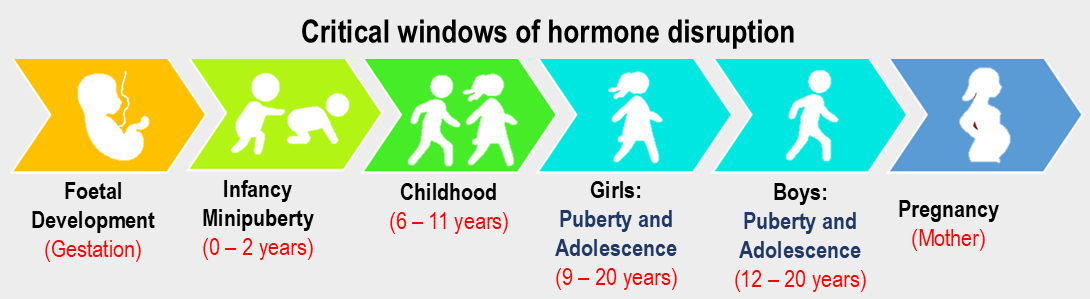
These stages are critical windows:
- At key moments, hormones step in as the conductors, guiding organs, brains, and bodies into harmony. But when phthalates disrupt the score, the melody of growth can be thrown off; echoing consequences that last for decades. From conception to adolescence, the human journey unfolds through a series of critical windows, each one a fragile performance, where timing and precision matter most.
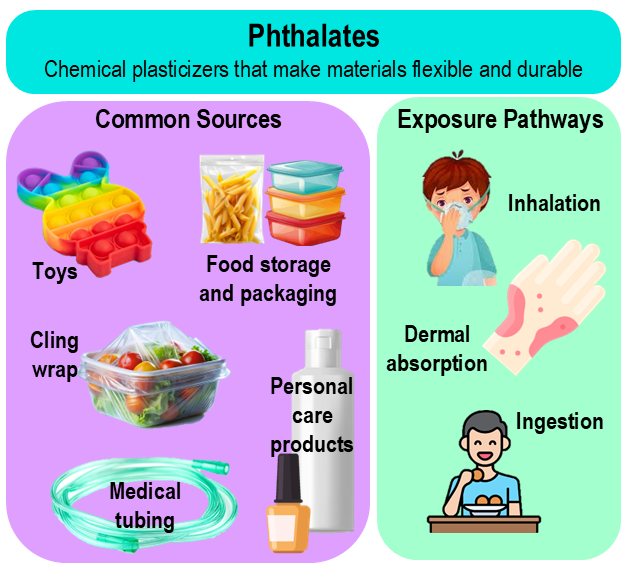
What Are Phthalates?
Understanding Critical Windows
Understanding critical windows requires grasping the concept of developmental programming: the idea that environmental exposures during sensitive periods can permanently alter physiological regulation in ways that predispose to disease later in life. This concept, formalised as the "developmental origins of health and disease" hypothesis, fundamentally changes how we think about environmental health risks.
Phthalate exposure during critical windows does not merely cause immediate toxicity, it reprogrammes development. Through mechanisms including epigenetic modifications (changes in gene expression without altering DNA sequence), altered cellular differentiation, and disrupted establishment of regulatory set points, prenatal and early-life phthalate exposure can establish trajectories toward obesity, diabetes, reproductive dysfunction, and other disorders that manifest decades after the exposure itself.
This creates a troubling temporal disconnect: the exposure occurs during foetal development or infancy, but the health consequences emerge in childhood, adolescence, or even middle age. This delayed manifestation makes establishing causation challenging and understanding risk even more critical.
First critical window: Before birth
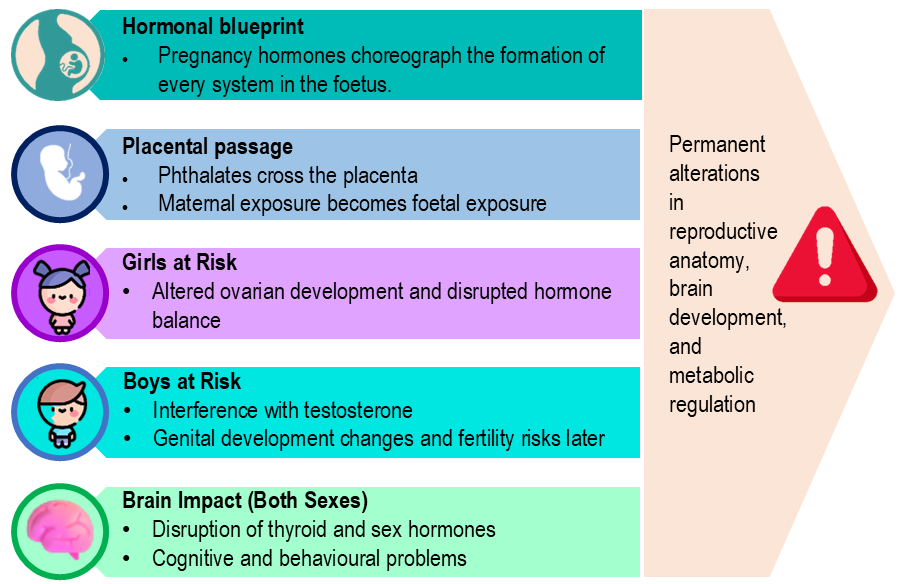
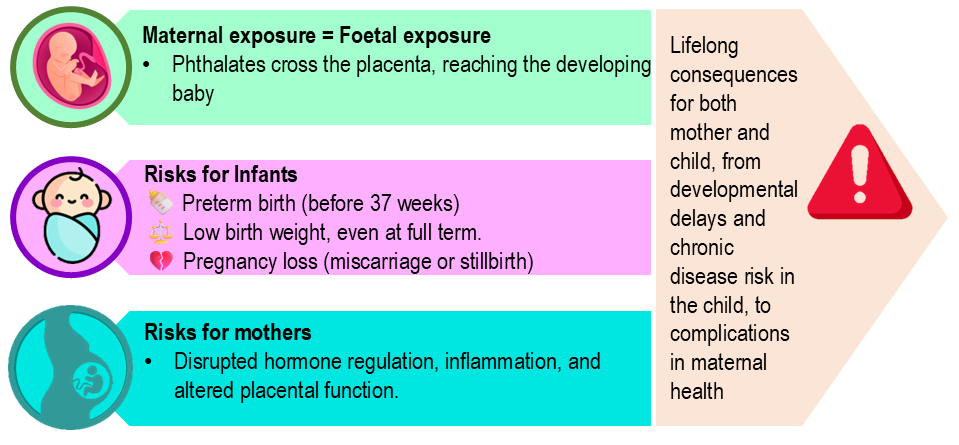
During pregnancy, hormones choreograph the formation of every system in the foetus. Phthalates cross the placenta and show up in amniotic fluid, which means maternal exposure is foetal exposure.
Second critical window: Infancy
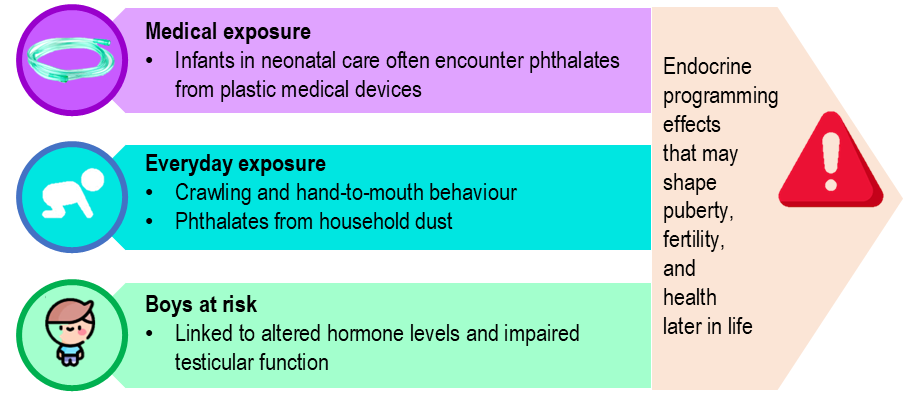
Few people know that babies experience a brief surge of sex hormones in the first months of life. This “mini‑puberty” helps complete reproductive development.
Third critical window: Childhood
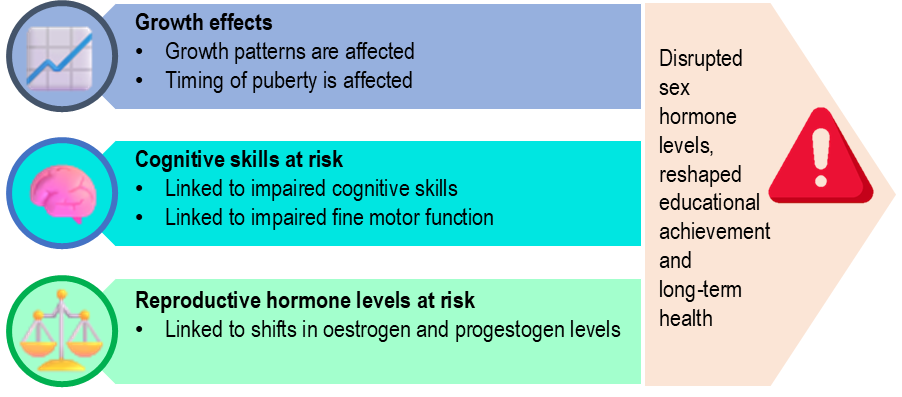
During childhood, from ages 6 to 11, children are still building bone, brain, and hormone systems.
Fourth critical window: Puberty and adolescence
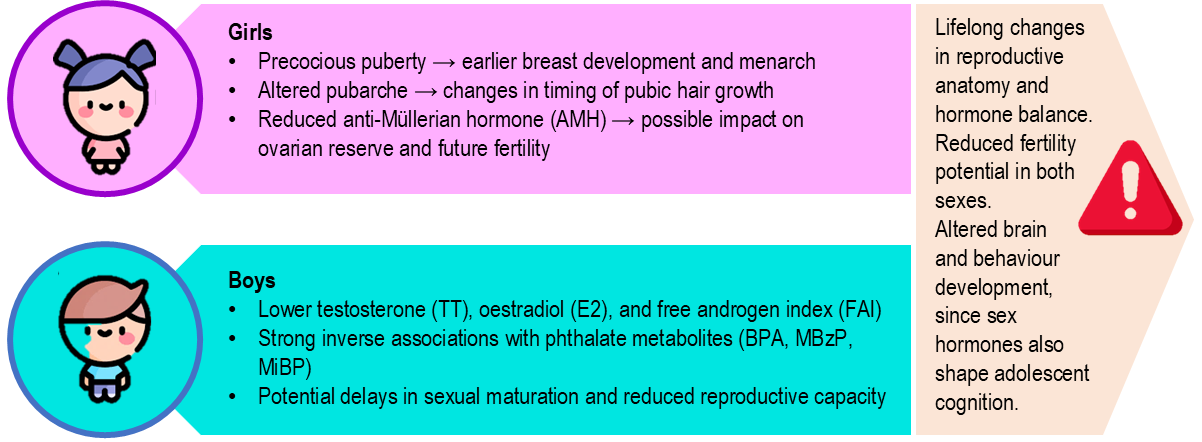
Puberty is the body’s second major hormonal storm. It sets the blueprint for adult fertility and hormone regulation. For girls (9 – 20 years), this means breast development and menarche. For boys (12 – 20 years); it means testosterone surges and sperm production.
Fifth critical window: Pregnancy
Pregnancy is itself a critical window, for both mother and child. Hormones orchestrate maternal adaptations and foetal growth, but phthalates can interfere with this delicate balance. Phthalate exposure has been associated with preterm birth, low birth weight, and pregnancy loss. These outcomes carry risks that extend far beyond delivery, influencing health for years to come. Pregnancy is a critical window for both mother and child.
Final Thought
The story of phthalates and critical windows reminds us that development is not a continuous process but rather a series of sensitive periods when specific environmental cues, or disruptions, can have outsized and permanent effects. Understanding these windows transforms phthalates from merely another environmental toxin into a chemical class that threatens the most fundamental processes of human development.
From the foetus in utero through the adolescent navigating puberty, each critical window represents a period when hormonal precision matters absolutely, and when endocrine disruption carries consequences that may last a lifetime. Protecting these vulnerable populations and respecting these critical windows must be central to any comprehensive approach to reducing phthalate risk and safeguarding human health across generations.