
The "Forever" Fallout: How PFAS Chemicals Are Quietly Rewriting Our Biological Code

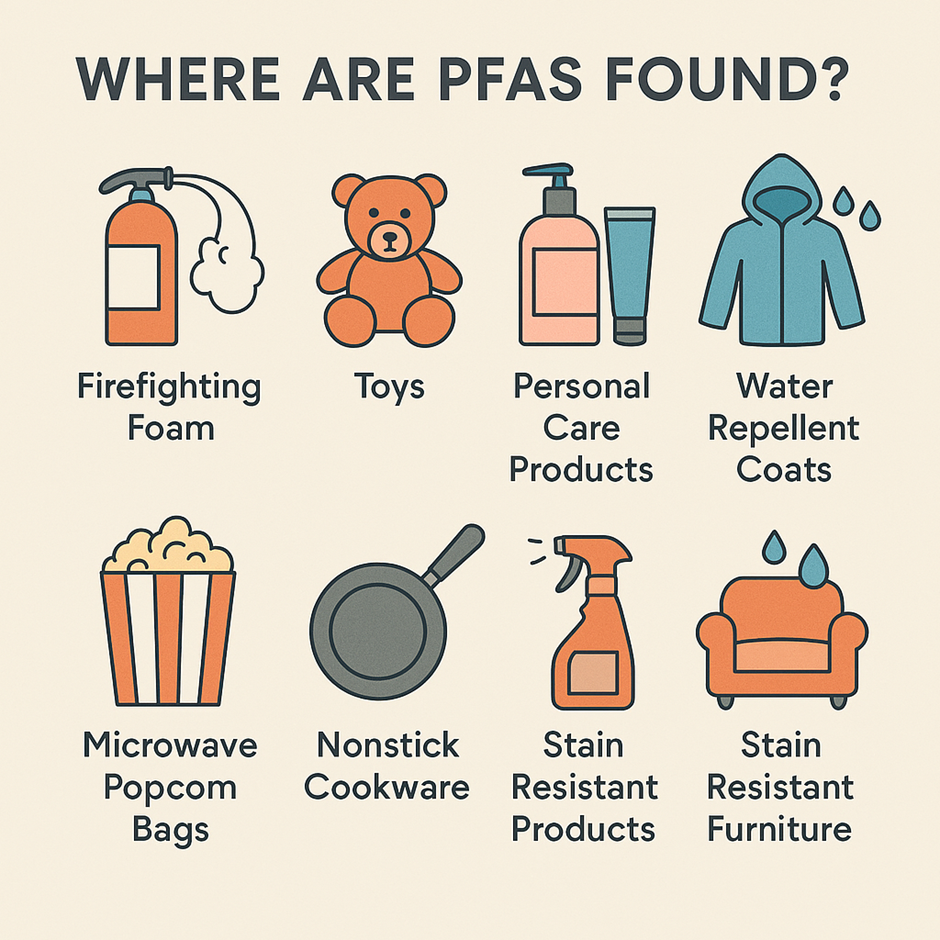
In today’s world, we live alongside invisible threats that linger far longer than we realise. Chief among them are the per- and polyfluoroalkyl substances, or PFAS. They are synthetic compounds often called “forever chemicals” because they resist breaking down in both the environment and our bodies. From non-stick cookware and waterproof clothing to firefighting foam and food packaging, PFAS have seeped into daily life and steadily accumulated in human tissues for decades.
While their durability made them industrial darlings, mounting evidence now shows that PFAS are wreaking havoc on our health. These chemicals act as potent endocrine-disrupting chemicals (EDCs), interfering with hormones and destabilising the delicate systems that keep us balanced. Unlike dramatic cases of acute poisoning, PFAS do not announce themselves with sudden illness. Instead, they infiltrate quietly, disrupting biological processes in ways that can trigger cascading health problems; effects that may take years, or even generations, to fully unfold.
This post draws on recent studies and expert analyses to unpack how PFAS are reshaping our biology, particularly through their impact on endocrine and metabolic systems. The good news? Awareness is the first step toward change. No PhD required - just a willingness to explore the science behind the chemicals that have become a permanent fixture of our modern environment.
What Makes PFAS So Sneaky?
PFAS are a vast class of synthetic chemicals, introduced in the 1940s, designed to make products resistant to water, heat, and stains. Their defining feature is the carbon‑fluorine bond; it is one of the strongest in chemistry, which means they do not readily break down in the environment or the human body. The consequence is troubling: PFAS accumulate in our blood, liver, and other tissues, persisting for years. This bioaccumulation reflects their environmental permanence; once released, they contaminate water, soil, and air, ultimately entering our food chain and drinking supplies.
The Human Connection
The real danger lies in how PFAS interact with our biology. These chemicals mimic or block natural hormones, throwing our body’s chemical messaging network, the endocrine system, into disarray. This disruption can cascade into widespread health problems, as shown in epidemiological studies, animal experiments, and laboratory research.
How PFAS behave inside the human body
- Entry points: PFAS typically enter through contaminated drinking water, food packaging, or household dust.
- Hormone disruption : Once inside, they act as endocrine‑disrupting chemicals (EDCs), interfering with the body’s chemical messaging system.
- Biological imposters: Because they resemble the fatty acids our bodies depend on, PFAS slip easily into the bloodstream.
- Circulation: They move freely through organs, spreading their disruptive effects.
- Binding: PFAS attach to proteins and receptors, altering normal biological functions.
- System hijacking: They interfere with critical processes: metabolism, immunity, and growth cycles, effectively rewriting the body’s biological code.
Exposure Pathways and Population Risk
Exposure Pathway | Primary Sources | Estimated Exposure Level | High-Risk Groups |
Drinking Water | Contaminated groundwater, municipal supplies | 200 million U.S. residents affected | Communities near industrial sites, military bases |
Dietary | Fish/seafood, contaminated agricultural products | Moderate to high bioaccumulation | High seafood consumers, subsistence fishers |
Food Packaging | Microwave popcorn bags, fast food wrappers, pizza boxes | Low to moderate | General population, frequent fast-food consumers |
Cookware | Nonstick pans (Teflon), treated bakeware | Moderate (especially when heated/scratched) | Daily users of nonstick cookware |
Indoor Environment | House dust, indoor air from treated furnishings | Low but chronic | Young children (hand-to-mouth behaviour) |
Consumer Products | Cosmetics, dental floss, stain-resistant clothing | Low to moderate | Daily users of treated products |
Occupational | Chemical manufacturing, firefighting (AFFF), ski waxing | Very high (orders of magnitude above background) | Firefighters, chemical workers, ski technicians |
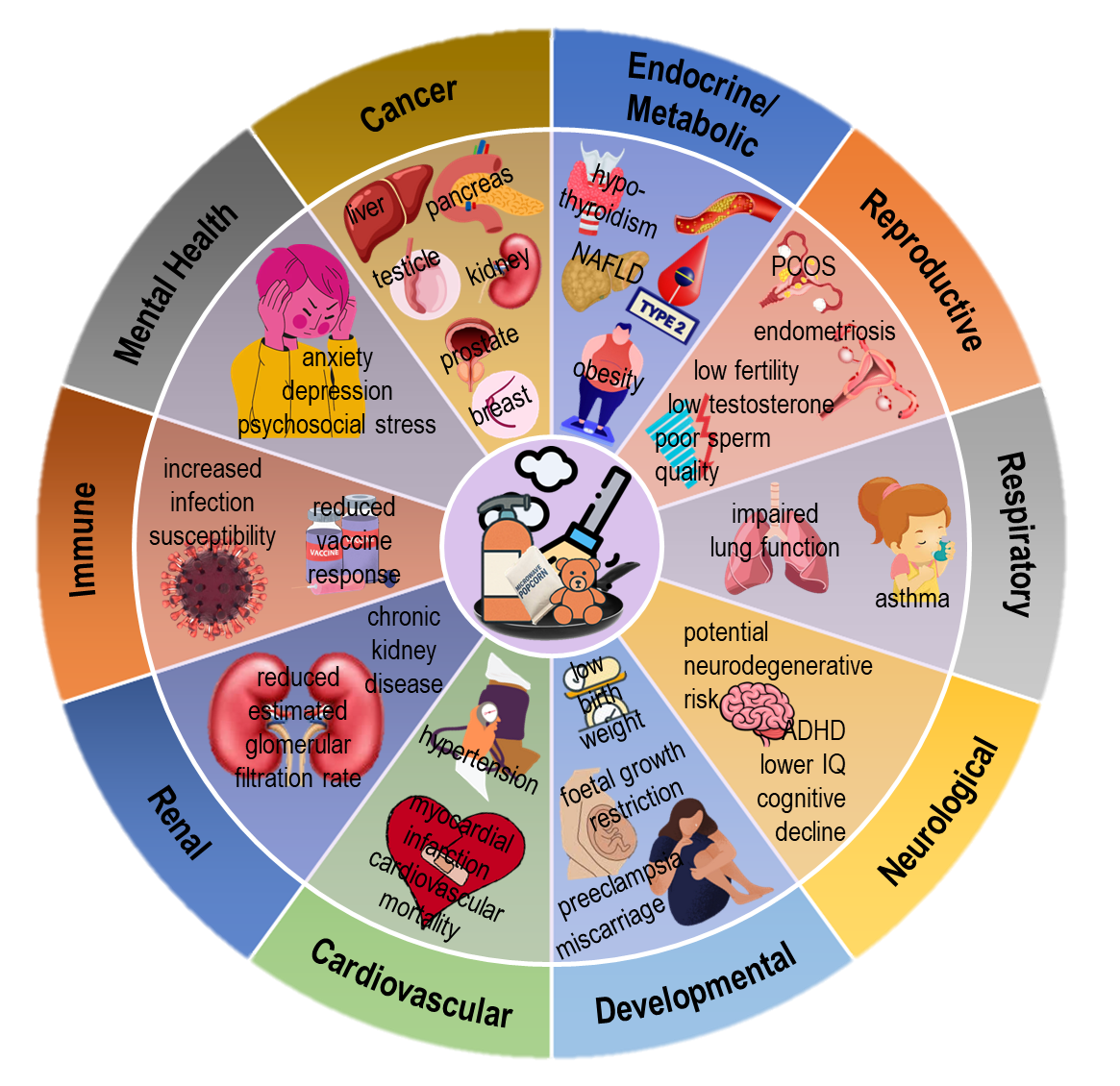
PFAS Health Effects by Organ or System
What You Can Do
- It is nearly impossible to avoid PFAS entirely.
- 97% of people in the U.S. have them in their blood.
BUT - you can reduce your "toxic load":
- Filter Your Water: Use high-quality water filters certified to remove PFAS.
- Rethink Your Kitchen: Avoid overheating non-stick pans and swap out grease-resistant food packaging for glass or stainless steel.
- Check Your Products: Opt for furniture, carpets, and clothing that are not labelled as "stain-resistant" or "water-repellent".
Understanding the health effects of PFAS is the first step in advocating for cleaner water and safer products. These chemicals may be "forever," but our exposure does not have to be.
Stay informed, advocate for testing in your community, and support policies that prioritize health over convenience. After all, forever chemicals should not mean forever risks.