
The Unseen Invaders: A Guide to Endocrine Disrupting Chemicals

Introduction
In our modern world, we are surrounded by convenience, plastic containers, non-stick pans, long-lasting cosmetics, and electronics. But this convenience often comes with a hidden cost: exposure to a class of harmful substances known as Endocrine Disrupting Chemicals, or EDCs. These chemicals silently interfere with our body’s most delicate communication system, the hormonal (endocrine) system, and have been recognised as a significant global public health challenge.
Recognition of EDCs as a global health crisis has intensified over the past two decades, driven by mounting evidence that these substances remain biologically active even at very low environmental concentrations and persist in both our bodies and the environment. Let us break down what they are, where they hide, and why they matter.
What Are EDCs?
At its core, an EDC is an external substance that messes with your hormones. The World Health Organisation defines an EDC “an exogenous substance or mixture that alters function(s) of the endocrine system and consequently causes adverse health effects in an intact organism, or its progeny or (sub-)populations.” The Endocrine Society offers a complementary definition: “exogenous chemical[s] that interfere with any aspect of hormone action.”
Together, these definitions help us understand that EDCs can disrupt hormones at multiple points. The defining characteristics of EDCs:
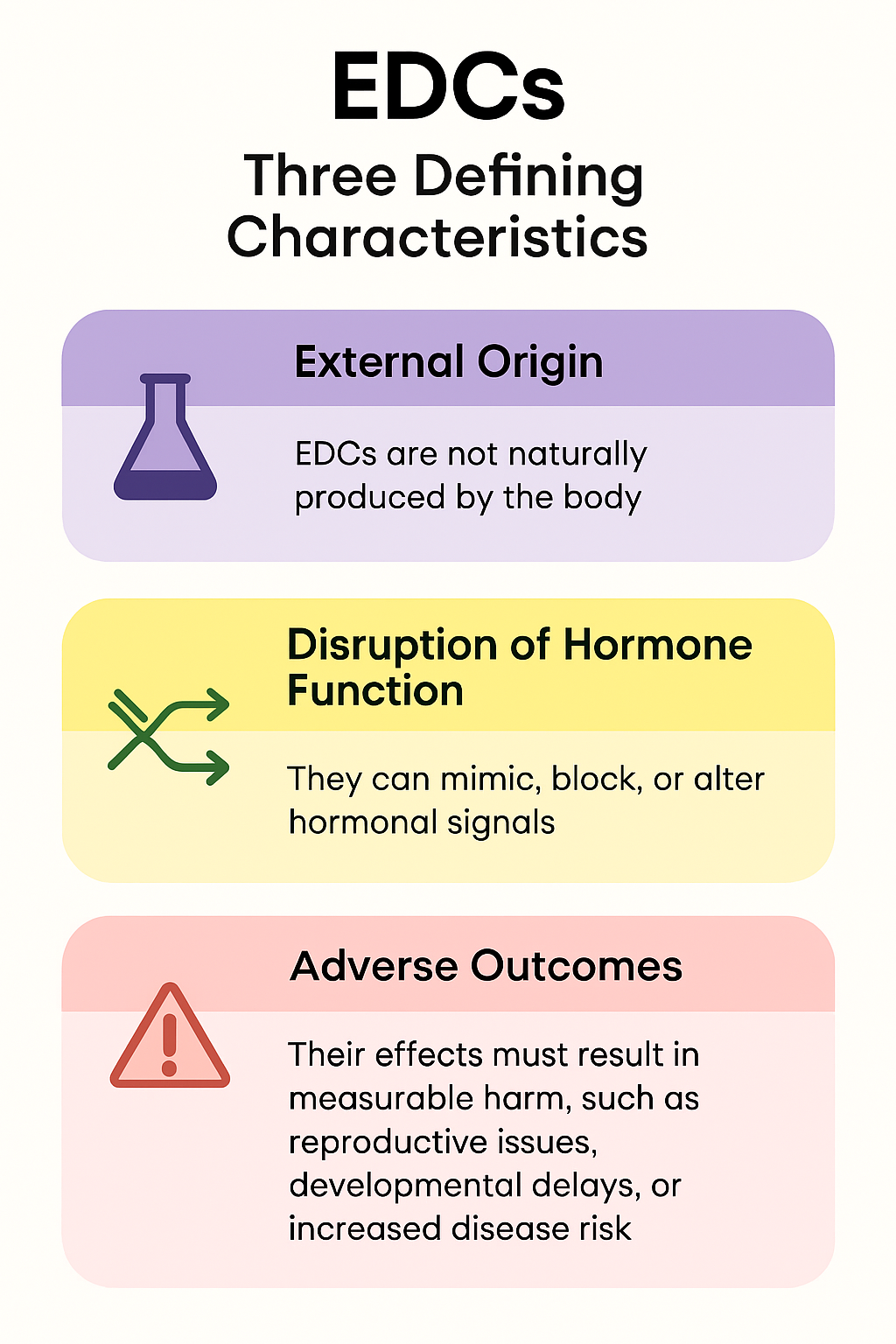
It is crucial to distinguish EDCs from benign "endocrine modulators." For example, compounds in coffee, chocolate, or soy can interact with our hormonal systems, but their effects are typically mild and dose-dependent. EDCs, on the other hand, are characterised by their capacity to cause adverse health outcomes, such as developmental disorders, reproductive problems, and an increased risk of certain cancers.
Where Do We Find EDCs? The Hidden Hotspots
The sources of EDCs are remarkably diverse, spanning industrial processes, agricultural applications, consumer products, and even natural compounds. EDCs are not a single chemical but a vast and heterogeneous group. Their pervasive production and ubiquitous use in modern society makes human exposure widespread and, for many, virtually unavoidable.
Here are the major categories and where you will find them:
Plastics and Plasticizers
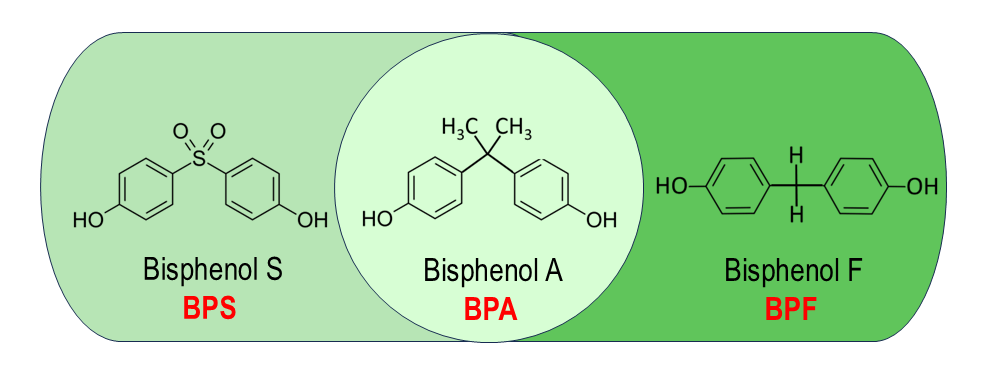
Bisphenol A (BPA) stands as one of the most extensively studied EDCs. This high-production volume chemical is used primarily to manufacture polycarbonate plastics and epoxy resins. BPA appears throughout modern life in food and beverage containers, canned food linings, water supply pipes, medical devices, thermal receipts, and children's toys. Most people are exposed primarily through their diet, though skin absorption and inhalation also contribute.
When regulations began restricting BPA use in certain products, manufacturers turned to alternatives like Bisphenol S (BPS) and Bisphenol F (BPF). Unfortunately, emerging evidence suggests these substitutes may be equally or even more harmful than the original compound, a phenomenon known as "regrettable substitution."
Chemical structures of the Bisphenols
| Phthalate | Full Name | Common Uses | Health Concerns |
DEHP | Di(2-ethylhexyl) phthalate | PVC plastics, medical tubing, packaging | Reproductive toxicity, hormone disruption |
DBP | Dibutyl phthalate | Nail polish, adhesives, plastics | Developmental effects, endocrine disruption |
BBP | Benzyl butyl phthalate | Vinyl flooring, sealants, automotive trim | Reproductive harm, endocrine effects |
DINP | Diisononyl phthalate | Flexible plastics, toys, cables | Suspected endocrine disruptor |
DIDP | Diisodecyl phthalate | Wire insulation, flooring, synthetic leather | Liver and thyroid effects (animal studies) |
DEP | Diethyl phthalate | Fragrances, cosmetics, personal care items | Hormone interference, skin absorption risks |
Per- and Polyfluoroalkyl Substances (PFAS)
PFAS comprise a family of over 4,700 man-made chemicals characterised by exceptional chemical stability. Often called "forever chemicals," PFAS possess unique properties including oil and water repellence and thermal stability, making them valuable for numerous applications.
Their oil- and water-repellent properties make them useful in:
- Non-stick cookware (e.g., Teflon)
- Stain-resistant carpets and fabrics
- Water-repellent clothing
- Food packaging (grease-resistant paper)
- Firefighting foams
- Electronics manufacturing
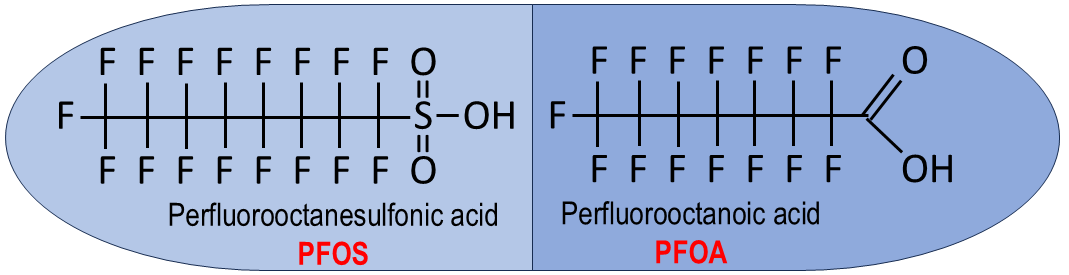
The carbon-fluorine bonds in PFAS molecules are among the strongest in organic chemistry, which explains why these substances persist indefinitely in the environment and accumulate in living organisms. The two most extensively studied and widely distributed PFAS compounds are perfluorooctanoic acid (PFOA) and perfluorooctanesulfonic acid (PFOS).
Chemical structures of PFOS and PFOA
Industrial and Agricultural Pollutants
Polychlorinated Biphenyls (PCBs) were historically used as flame retardants and in various industrial applications. Though largely banned, these chemicals persist in the environment as legacy pollutants and continue to contaminate the environment and bioaccumulate in the food chain.
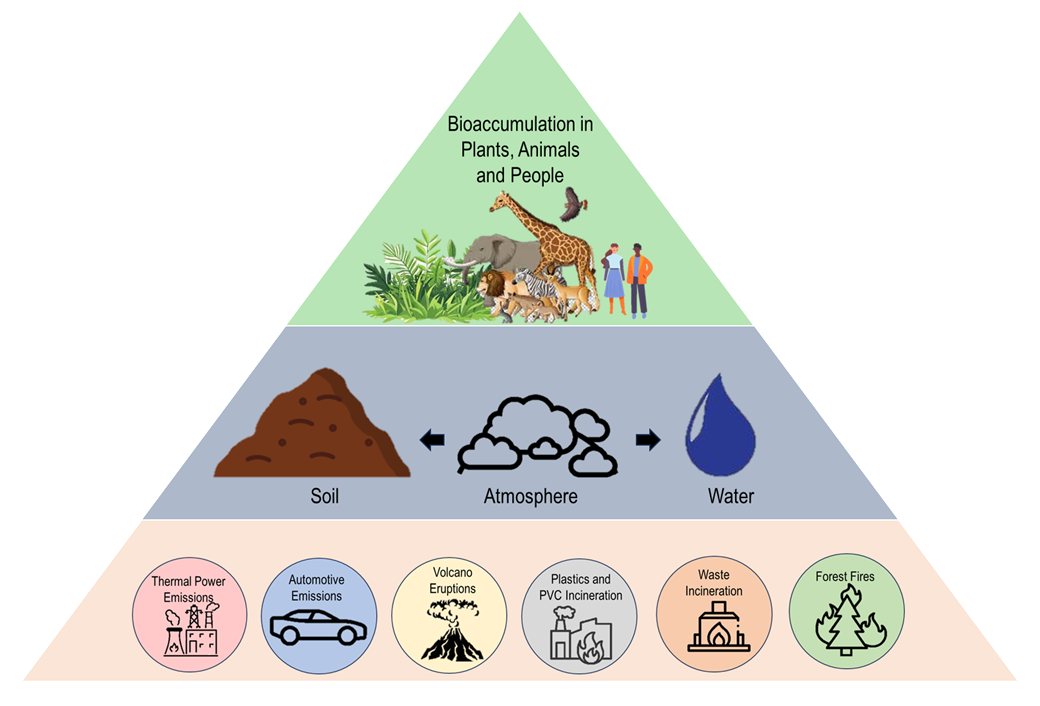
Dioxins are highly toxic compounds produced primarily as byproducts of industrial processes, particularly waste incineration, and pesticide manufacturing. They travel long distances in the atmosphere, settling onto soil, water, and vegetation. They bioaccummulate in fatty tissues of animals and humans. Their extreme toxicity and persistence make them particularly concerning EDCs as they are associated with immune dysfunction and cancer risk.
The pyramid illustrates how dioxin emissions enter the atmosphere, disperse through water and soil, accumulate in vegetation and animals, and ultimately reach humans through the food chain:
Pesticides represent a significant EDC source. Organochlorine pesticides organochlorine pesticides like DDT (and its breakdown product, DDE), though banned in many countries, remain in the environment due to their persistence. Many contemporary pesticides, herbicides, fungicides, and insecticides have also been demonstrated to possess endocrine-disrupting properties.
Here is a table of key pesticide EDCs:
Pesticide | Type | Common Uses | Endocrine Effects |
DDT / DDE | Organochlorine insecticide | Legacy agricultural use, persists in environment | Estrogen mimicry, reproductive harm, cancer risk |
Atrazine | Herbicide | Maize, sugarcane, broadleaf weed control | Hormone imbalance, developmental delays |
Vinclozolin | Fungicide | Fruits and vegetables | Anti‑androgenic activity, male reproductive disruption |
Chlorpyrifos | Organophosphate insecticide | Crops, pest control | Thyroid disruption, neurodevelopmental effects |
Malathion | Organophosphate insecticide | Agriculture, mosquito control | Hormone interference, reproductive toxicity |
Pyrethroids | Synthetic insecticides | Household sprays, crop protection | Estrogenic and anti‑androgenic activity |
Flame Retardants, including polybrominated diphenyl ethers (PBDEs) and organophosphorus flame retardants (OPFRs), are incorporated into furniture foam, electronics, and textiles to meet fire safety standards. While intended to protect us, these chemicals leach from products and accumulate in household dust.
Other Significant Sources
Heavy Metals like cadmium, mercury, and lead exhibit endocrine-disrupting properties alongside their other toxic effects.
Environmental Oestrogens originate from both agricultural sources (livestock waste) and human sources (pharmaceutical compounds excreted in urine). Notable examples include diethylstilbestrol (DES), a synthetic oestrogen historically prescribed to prevent miscarriage, and natural phytoestrogens like genistein and daidzein found in soy products and legumes. They can enter the environment through agricultural runoff and human waste.
Why This Matters
The science is clear: EDCs are not just a theoretical toxicological issue. They are a class of environmental contaminants integrated throughout modern life. From plastics and food packaging to pesticides, electronics, and personal care products, exposure sources are numerous and embedded in the global ecosystem. High-production volume chemicals like bisphenols and phthalates create near-constant exposure, while the "forever" nature of PFAS and PCBs ensures their impact will be felt for generations. The problem is further complicated by "regrettable substitution," where one bad actor is simply replaced with another.
They are a fundamental public health priority. Their ability to cause harm at low doses, their persistence in our bodies and the environment, and their ubiquity create a perfect storm for chronic health issues. This pattern suggests that addressing the EDC challenge requires more than simply banning individual chemicals; it demands a fundamental shift in how we design, test, and regulate chemicals before they enter widespread use.
Why EDCs are a Global Challenge
Several factors make EDCs uniquely difficult to manage:
- Ubiquity: They are embedded in everyday products, from food packaging to cosmetics.
- Persistence: Many, like PFAS and PCBs, remain in the environment for decades.
- Generational impact: Effects can extend to offspring, raising concerns about transgenerational harm.
- Regrettable substitution: Banning one compound often leads to replacement with structurally similar chemicals that pose equal risks.
Moving Forward
Human exposure to EDCs is a widespread and virtually unavoidable feature of contemporary life. This reality positions EDCs not merely as a toxicological issue, but as a fundamental and urgent public health priority. The ubiquity and diversity of these chemicals make complete avoidance impossible, but awareness can help reduce exposure.
Addressing the risks posed by EDCs requires concerted effort on multiple fronts: developing stricter regulatory frameworks that consider cumulative exposures and mixture effects, promoting safer chemical alternatives through green chemistry principles, and enhancing public awareness to enable informed consumer choices. Only through such comprehensive action can we hope to mitigate exposure and safeguard health for current and future generations.
The challenge of EDCs ultimately reflects broader questions about the relationship between industrial progress and human health. As we continue to develop new materials and chemicals, we must prioritize understanding their long-term health implications before introducing them into widespread use. The EDC crisis teaches us that the convenience and benefits of modern chemistry come with responsibilities: to test thoroughly, regulate appropriately, and act swiftly when harm becomes evident.
Conclusion: A Call for Awareness and Action
Understanding EDCs is the first step toward mitigating their risks. While it is nearly impossible to avoid them entirely, being informed allows us to make smarter choices, like reducing plastic use, choosing fresh over canned foods, and being mindful of the products we bring into our homes.
Ultimately, addressing the EDC challenge requires a concerted effort. We need:
- Stricter Regulatory Frameworks that prioritize health over convenience.
- Investment in Safer Alternatives to avoid regrettable substitutions.
- Enhanced Public Awareness to empower individuals to reduce their exposure.
By recognising these unseen invaders in our daily lives, we can take steps to protect our health and the health of future generations.