
Understanding Parabens: Everyday Preservatives with Hidden Health Concerns
When you pick up a bottle of shampoo, a tube of lotion, or even a packaged snack, chances are you will find parabens listed among the ingredients. These chemicals are some of the most widely used preservatives in consumer products. They keep mould, bacteria, and fungi from growing, which helps extend shelf life and protect us from spoilage.
But parabens are also part of a bigger conversation: they belong to a group of substances known as endocrine‑disrupting chemicals (EDCs), which can interfere with the body’s natural hormone systems.
This post explores what parabens are, where they are found, how we are exposed to them, and why scientists are debating their health risks.
What Are Parabens?
Parabens are a group of synthetic chemicals widely used as preservatives to stop the growth of harmful bacteria and mould. Manufacturers rely on them because they are inexpensive, effective, and versatile, making them staples across cosmetics, pharmaceuticals, and even food products.
Scientifically, parabens are classified as esters of p‑hydroxybenzoic acid (PHBA). The most common types you will see on product labels are:
- Methylparaben (MeP)
- Ethylparaben (EtP)
- Propylparaben (PrP)
- Butylparaben (BuP)
First synthesized in the 1920s, parabens quickly became industry favourites because they are:
- Cheap to produce
- Highly effective at preserving products
- Stable under different conditions
Paraben chain Length vs. Concern Level
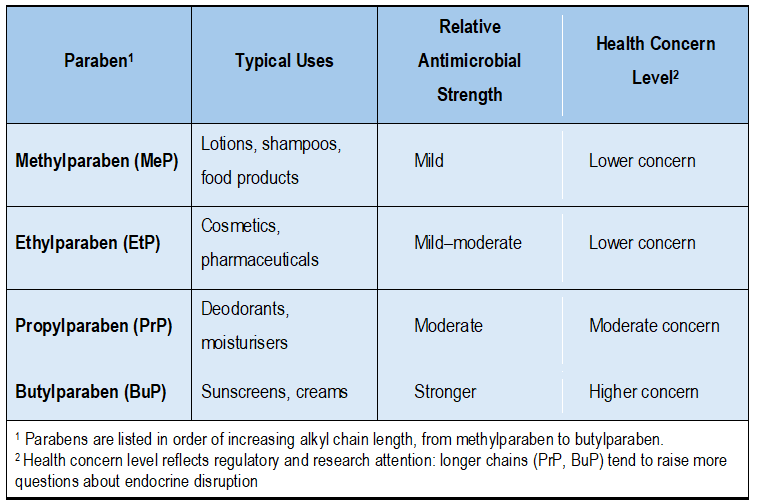
Parabens vary in their molecular chain length, which influences:
- Solubility (how easily they dissolve)
- Antimicrobial strength (how well they kill microbes)
- Potential health impact (longer chains often raise more concern)
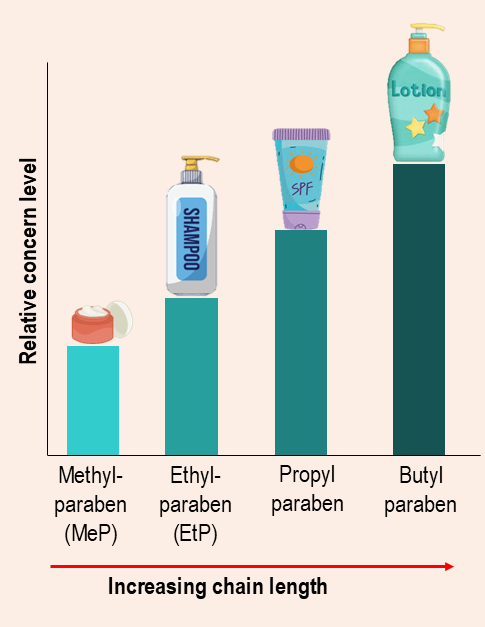
Paraben chain length vs. level of concern
Long chain parabens tend to rise more health concerns due to stronger oestrogenic activity.
Common Parabens Compared
Where Do We Encounter Parabens?
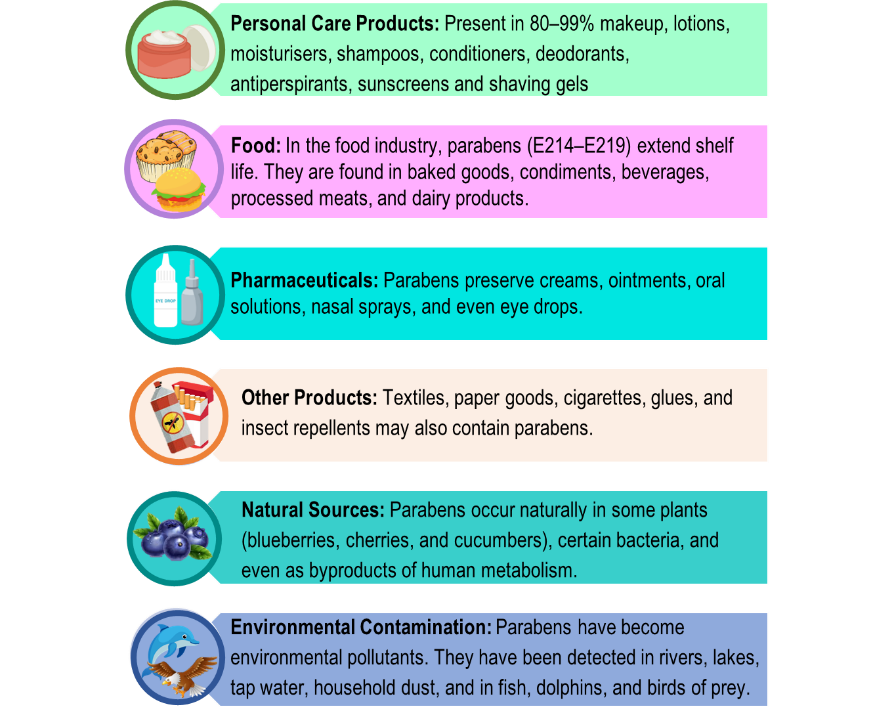
The sheer breadth of paraben use is striking. They appear in 80-99% of personal care products, including makeup, lotions, shampoos, deodorants, sunscreens, and shaving products. Beyond the bathroom cabinet, parabens preserve pharmaceuticals, from topical creams to oral medications and even injectable drugs.
In food products, parabens (labelled E214-E219 in Europe) extend shelf life in baked goods, cereals, condiments, beverages, processed meats, and dairy products including infant formula. They are even found in textiles, paper products, cigarettes, and food packaging.
Interestingly, while most commercial parabens are synthetic, these compounds occur naturally in some plants like blueberries, strawberries, carrots, and vanilla, and certain bacteria can produce them. The human body can even form small amounts during normal amino acid metabolism.
How Do Parabens Enter Our Bodies?
We are exposed to parabens through three main pathways, with personal care products representing the most significant source.
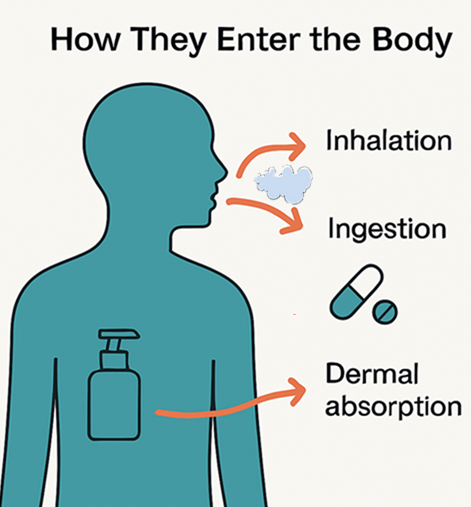
Through Our Skin (dermal absorption): This is the primary exposure route for most people. Parabens penetrate skin barriers, especially when products contain alcohol or when skin is damaged. Leave-on products like lotions and deodorants provide continuous exposure throughout the day.
Through Our Diet: We ingest parabens through processed foods and pharmaceuticals. While the liver and intestines metabolize much of what we swallow, reducing its impact compared to skin absorption, dietary exposure still contributes to our total body burden.
Through Our Airways: Inhaling cosmetic sprays, hair products, and face powders introduces parabens directly into our respiratory system. Beauty salon workers face particularly high occupational exposure from airborne parabens in their workplace.
Inside out body
Once in the body, parabens are typically metabolised into PHBA and excreted in urine within 24-48 hours. However, continuous daily exposure means they are constantly present in our systems.
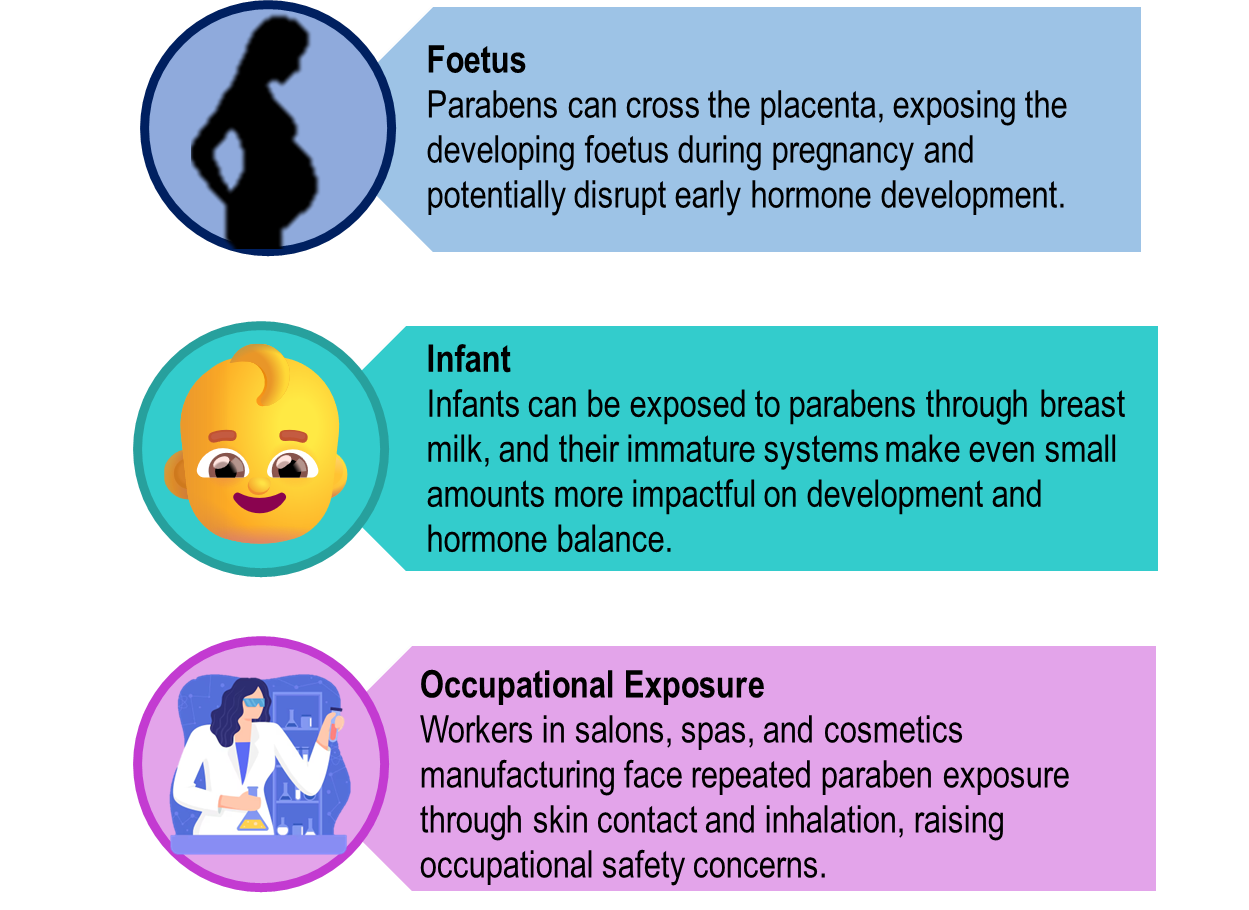
Particularly concerning is that parabens cross the placenta during pregnancy and transfer through breast milk, meaning foetuses and infants face exposure during critical developmental periods.
Vulnerable groups
Why Should We Care? The Health Concerns
Parabens are classified as EDCs because they act as xenoestrogens, chemical imposters that mimic the hormone oestrogen in our bodies. Even though their oestrogenic potency is far weaker than natural hormones (estimated to be 10,000–2.5 million times less than oestradiol), critics argue that chronic, combined exposure could still matter. This hormonal interference raises several health concerns:
Reproductive health
- In women: Linked to irregular periods, polycystic ovary syndrome (PCOS), endometriosis, and infertility.
- In men: May reduce sperm quality, lower testosterone levels, and cause DNA damage in sperm.
Cancer risk
The most controversial concern involves breast cancer. Intact parabens have been detected in breast tumour tissues, and laboratory studies show they can promote cancer cell proliferation and migration. Parabens bind to oestrogen receptors, triggering genes involved in cell growth and potentially enabling cancer's hallmark behaviours such as evading growth controls and resisting cell death.
However, the epidemiological evidence remains mixed. Some studies link higher paraben exposure to increased breast cancer risk, while others find no association or even inverse relationships. Recent research has also identified associations with thyroid cancer.
A groundbreaking intervention study called REDUXE* provided compelling evidence: when healthy volunteers avoided paraben-containing products for just 28 days, researchers observed reversal of cancer-associated gene expression patterns in their breast tissue. This suggests parabens may alter cellular programming in ways that could promote cancer, and importantly, that these changes are reversible.
Metabolic effects
As "obesogens," parabens may promote fat cell formation and contribute to obesity and type 2 diabetes, possibly through oxidative stress and insulin resistance.
Thyroid disruption
Parabens can interfere with the thyroid hormone system, altering levels of thyroid-stimulating hormone and thyroid hormones that regulate metabolism.
Skin and respiratory
Can cause allergic reactions like dermatitis (redness, itching). Inhaled parabens may irritate airways, especially in kids.
Other health issues
Skin reactions including allergic contact dermatitis can occur, especially in sensitive individuals. Inhalation exposure has been associated with airway irritation and potentially impaired lung function in children. Recent research has also identified connections to kidney injury and liver damage.
The "Safe" Debate
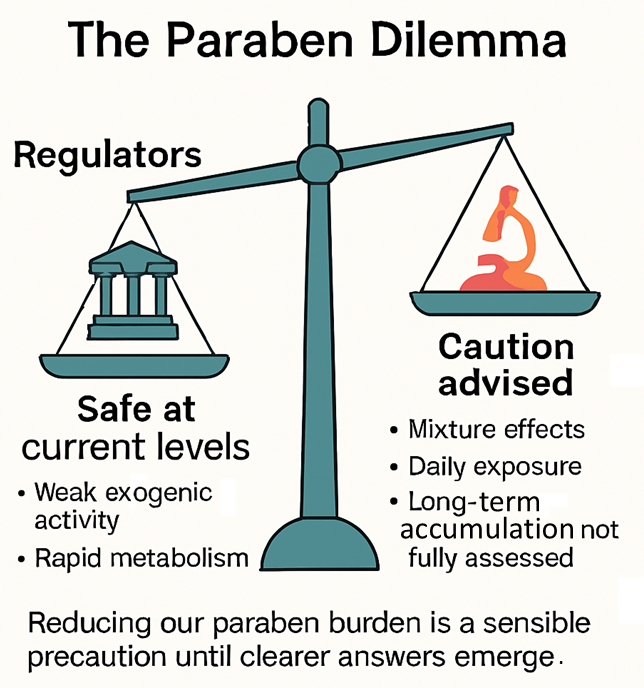
Regulatory agencies maintain that parabens are safe within specified limits, pointing out that their estrogenic potency is 10,000 to 2.5 million times weaker than natural oestrogen.
However, critics argue that cumulative, chronic exposure to multiple parabens simultaneously, combined with other endocrine disruptors in our environment, may overwhelm these safety margins.
The key concern is that we are not exposed to parabens in isolation or in single doses. We apply multiple paraben-containing products daily, consume them in foods, inhale them from air and dust, and this exposure continues throughout our lives, starting before birth.
Environmental Impact
Parabens do not just affect human health; they have become environmental pollutants. They are detected in surface water, groundwater, tap water, and even swimming pools due to incomplete removal during wastewater treatment. Wildlife studies have found parabens in fish, marine mammals like polar bears and dolphins, and birds of prey, often showing bioaccumulation up the food chain.
What Can You Do?
While avoiding parabens completely is challenging given their ubiquity, you can reduce your exposure:
- Read ingredient labels and choose paraben-free alternatives when available
- Reduce use of unnecessary personal care products
- Choose fresh, minimally processed foods over heavily preserved options
- Be aware that "natural" or "organic" labels do not always mean paraben-free; check ingredients
- Consider that longer-chain parabens (propyl-, butyl-) have greater estrogenic activity than shorter-chain versions (methyl-, ethyl-)
The REDUXE study offers hope: even a month of reduced exposure can reverse some cellular changes, suggesting that conscious choices about product use may meaningfully reduce health risks.
The Bottom Line
Parabens highlight a modern dilemma: highly effective preservatives that keep everyday products safe, yet raise concerns about long‑term health impacts.
- Scientific debate continues — regulators often deem current exposure levels safe, citing weak estrogenic activity and rapid metabolism.
- Researchers caution that daily mixture effects and long‑term accumulation may not be fully captured in safety assessments.
- Precautionary approach — limiting exposure, especially for pregnant women, infants, and children, is sensible while evidence evolves.
- Consumer demand is shifting — paraben‑free alternatives are increasingly available, and regulatory action may follow.
Bottom line: Reducing our paraben burden is a prudent step until clearer answers emerge.
* Dairkee, S. H., Moore, D. H., Luciani, M. G., Anderle, N., Gerona, R., Ky, K., Torres, S. M., Marshall, P. V., & Goodson, W. H. III. (2023). Reduction of daily-use parabens and phthalates reverses accumulation of cancer-associated phenotypes within disease-free breast tissue of study subjects. Chemosphere, 322, https://doi.org/10.1016/j.chemosphere.2023.138014