
Bisphenols and Your Health: What You Need to Know
Everyday Chemicals, Hidden Risks
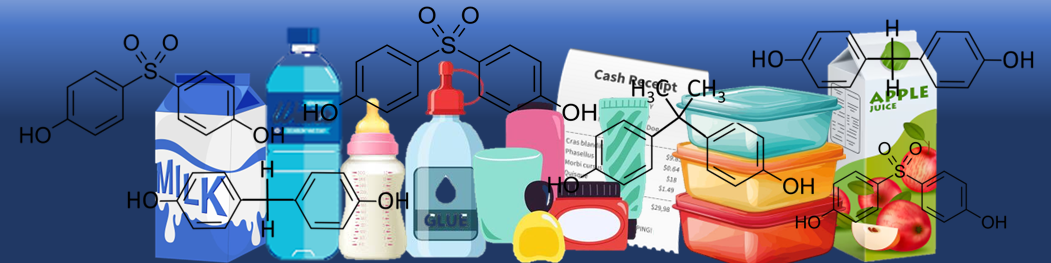
Check your water bottle, receipt, or food can, chances are you are holding a product containing bisphenols. These synthetic chemicals are everywhere: in plastics, food packaging, thermal paper, and countless everyday items we touch without thinking twice.
You have probably seen "BPA-free" labels on water bottles and baby products. While manufacturers have responded to public concern about Bisphenol A (BPA), they have largely replaced it with chemical cousins that sound less familiar: BPS, BPF, BPAF. The problem? Research increasingly shows these substitutes carry similar risks.
What makes bisphenols particularly concerning is how they operate in our bodies. These chemicals are endocrine disruptors, they mimic and interfere with our natural hormones, the precise chemical messengers that regulate everything from growth and reproduction to metabolism and brain development. When these signals get scrambled, the consequences can affect multiple systems throughout the body.
Understanding bisphenols is not just about avoiding one chemical on a label. It is about recognising a broader pattern of exposure and making informed choices about the products we bring into our homes and lives.
How Bisphenols Disrupt the Body
Bisphenols are chemicals that interfere with our hormone systems in insidious ways. They do not simply pass through our bodies harmlessly. Instead:
- Bisphenols can bind to hormone receptors (like those for oestrogen or testosterone),
- Block our natural hormones from performing their essential functions, and
- Trigger abnormal cellular signals even at remarkably low doses.
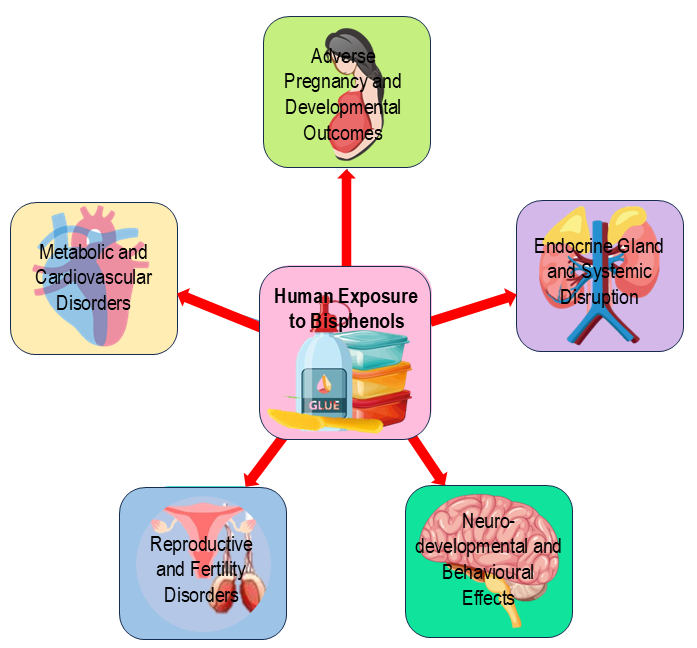
Bisphenols are considered whole-body disruptors rather than chemicals with isolated, predictable effects because the disrupt our hormones. Hormones are the body’s master regulators, guiding metabolism, immunity, mood, and reproduction. When bisphenols disrupt these signals, the effects cascade across multiple systems, impacting not just reproductive organs but also bone density, cardiovascular health, brain chemistry, and metabolism.
Key Health Effects
1. Reproductive Health
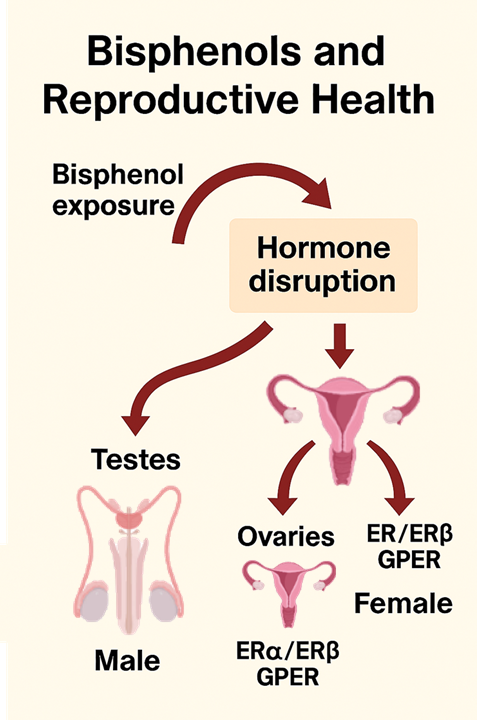
Women: Bisphenols have been linked to infertility, poor egg quality, and conditions like polycystic ovary syndrome (PCOS). They may also increase risks of endometriosis and uterine fibroids. These effects are often mediated through oestrogen receptor interference, which alters ovarian hormone signalling, follicle maturation, and uterine tissue responsiveness. Developmental exposure may also affect reproductive tract formation and long-term fertility potential.
Men: Studies show reduced sperm count, poor sperm quality, and disrupted testosterone production. Even “BPA free” substitutes like BPS and BPF can impair fertility by interfering with androgen receptors and testicular steroidogenesis. Bisphenols may also affect Sertoli and Leydig cell function, compromising sperm development and hormonal balance during critical windows of male reproductive maturation.
This infographic illustrates how bisphenols disrupt reproductive health by binding to oestrogen receptors (ERα/ERβ, GPER) and antagonising androgen receptors (AR). Arrows highlight interference points in the ovaries, uterus, and testes, showing how hormone disruption cascades into fertility and developmental problems.
2. Metabolic and Cardiovascular Health
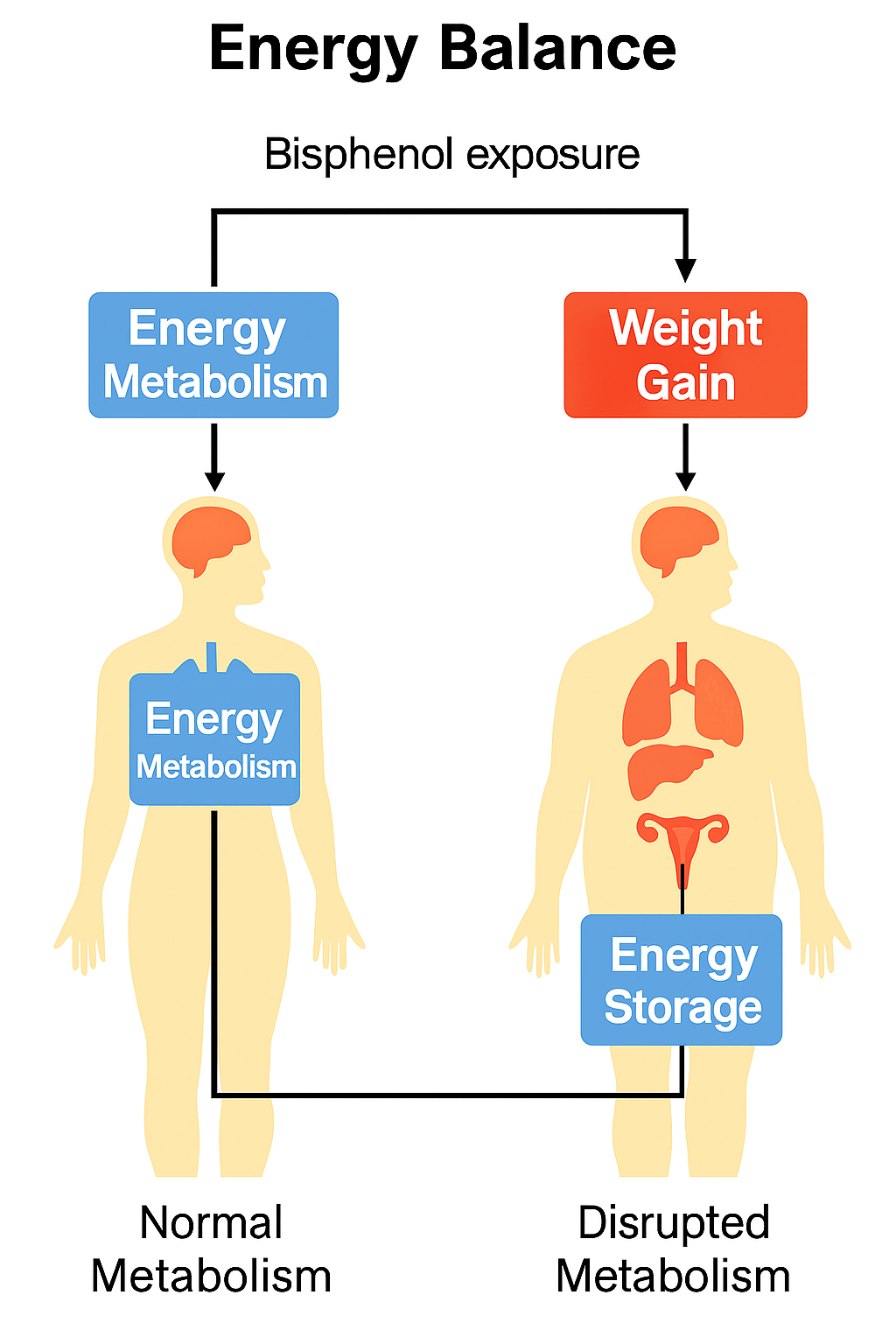
Bisphenols are now classified as obesogens. Obesogens are chemicals that promote obesity by interfering with metabolic regulation. They:
- Disrupt insulin signalling, impairing glucose control and increasing risk for type 2 diabetes.
- Activate PPARγ, a receptor that drives fat cell formation and lipid storage, even at low exposure levels.
- Contribute to cardiovascular problems such as hypertension, atherosclerosis, and heart disease through chronic inflammation, endothelial dysfunction, and altered lipid metabolism.
- Alter appetite and energy balance, influencing hormones like leptin and ghrelin that regulate hunger and satiety.
- Programme long-term metabolic risk when exposure occurs during prenatal or early childhood development, raising lifetime susceptibility to obesity and related disorders.
This schematic compares healthy energy metabolism with the disrupted metabolic pathways triggered by bisphenol exposure. The left panel illustrates balanced insulin signalling and regulated energy storage, while the right panel shows how bisphenols promote weight gain, insulin resistance, and altered energy homeostasis.
3. Brain and Behaviour
Bisphenols can cross both the placenta and the blood–brain barrier, meaning they reach developing brains.
- Linked to cognitive and behavioural changes in children, including attention deficits, hyperactivity, and altered social behaviours.
- Animal studies show memory impairment and stress axis disruption, with effects on the hypothalamic–pituitary–adrenal (HPA) axis that regulate stress responses.
- Substitutes like BPS and BPB show similar neurotoxic effects, suggesting that “BPA-free” alternatives may not be safer.
- Interfere with neurotransmitter systems, such as dopamine and serotonin, which are critical for mood regulation and learning.
- Developmental exposure may alter brain wiring, affects synaptic plasticity and increasing vulnerability to anxiety, depression, and neurodevelopmental disorders later in life.
Vulnerable Childhood Time – Summary
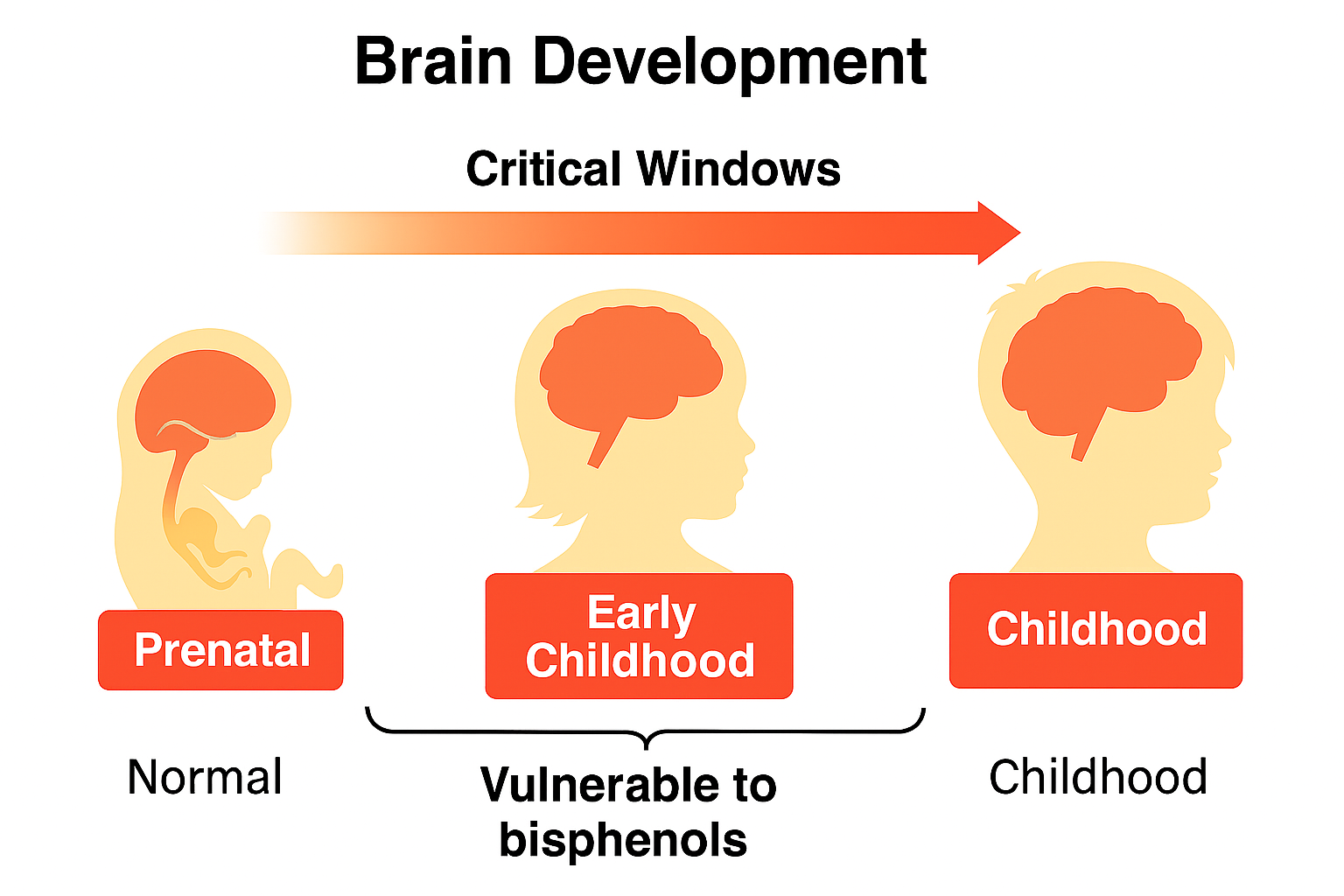
Childhood represents a series of critical windows of brain development where endocrine disruption can have lasting effects.
- Prenatal stage: Neural tube formation and rapid brain growth depend on oestrogen and thyroid hormones. Bisphenols crossing the placenta can interfere with these signals, altering brain architecture before birth.
- Early childhood (0–5 years): Synaptogenesis, myelination, and circuit refinement shape learning, memory, and emotional regulation. Exposure to bisphenols during this stage may impair cognition and behaviour.
- Later childhood (5+ years): Brain circuits begin to stabilize, but earlier disruptions often manifest as attention problems, learning difficulties, or emotional dysregulation.
- Critical windows: These sensitive periods are biologically irreversible — damage sustained cannot be repaired later, making early exposure especially concerning.
This illustration highlights key stages in early brain development, emphasising the prenatal and early childhood periods as critical windows where bisphenol exposure can disrupt hormonal signalling and neural organisation.
4. Endocrine Glands and Immune System
Beyond sex hormones and metabolism, bisphenols disrupt several critical systems:
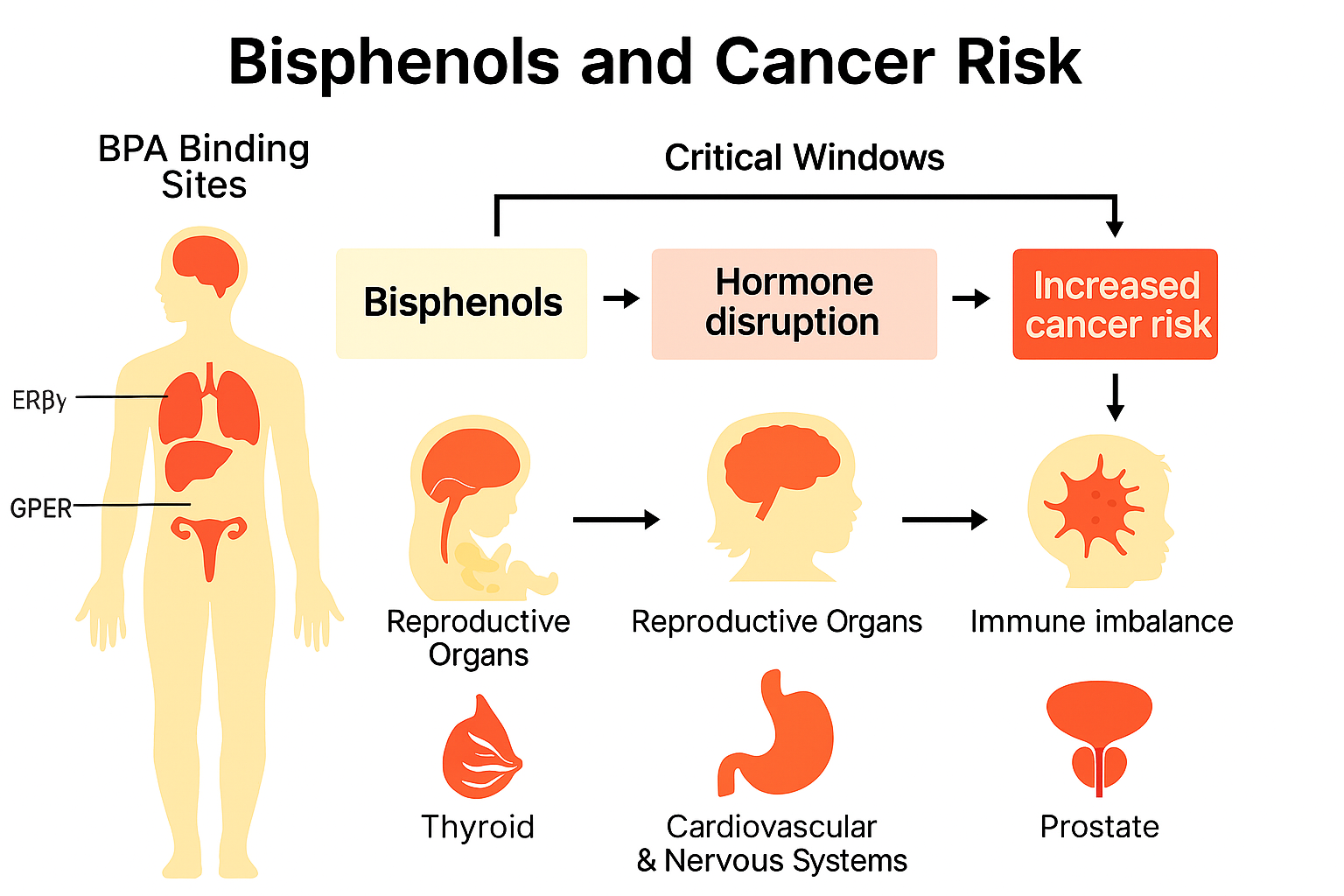
- Thyroid function: Essential for growth and brain development, thyroid signaling is highly sensitive to bisphenol interference. Disruption can impair neurodevelopment, metabolism, and overall endocrine balance.
- Immune regulation: Bisphenols modulate immune cell activity and inflammatory pathways, promoting oxidative stress and reducing immune surveillance. This creates a persistent pro‑inflammatory state that weakens defenses and fosters disease progression.
- Cancer susceptibility: Hormone‑dependent cancers such as breast, prostate, and endometrial cancer are particularly vulnerable. Bisphenols stimulate abnormal proliferation in hormone‑sensitive tissues, while developmental exposure may epigenetically reprogramme cancer risk. Immune dysfunction and chronic inflammation further elevate oncogenic potential.
This infographic highlights how bisphenols reprogramme cancer risk.
5. Pregnancy and Development
Perhaps the most concerning effects occur during pregnancy:
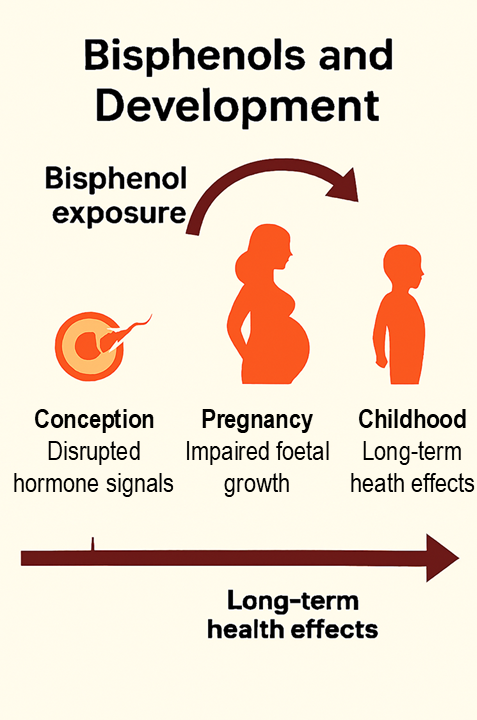
- Bisphenols cross the placenta: They alter hormone signals and nutrient transport during critical windows of foetal development.
- Bisphenols are associated with growth development: They are assosciated with preterm birth, impaired foetal growth, and disrupted genital development, particularly through interference with oestrogen, androgen, and thyroid hormone pathways.
- Bisphenol exposures may “programme” disease risk: Their effects appears decades later, including metabolic disorders, reproductive dysfunction, and neurodevelopmental conditions.
- Bisphenols trigger epigenetic changes: Epigenetic changes can rewire gene expression patterns, making early exposure a silent driver of long-term health outcomes.
Placental vulnarabiity amplifies EDC risk, as bisphenols can impair endocirne and immune functions, compromising foetal protection and signalling.
This timeline illustrates how bisphenols interfere with hormone signalling and organ development from conception through adulthood. Disruption begins at fertilisation, intensifies during pregnancy as bisphenols cross the placenta, and continues through childhood, where early exposure may impair cognition and behaviour. These developmental insults can later manifest as chronic disease, reproductive dysfunction, and increased cancer risk.
What Can You Do?
While it is impossible to avoid bisphenols completely, you can reduce exposure:
- Limit canned foods (the linings often contain bisphenols).
- Avoid heating food in plastic containers: Heat increases chemical leaching.
- Choose glass or stainless steel for food storage and water bottles.
- Check labels carefully: “BPA‑free” does not guarantee safety.
The Bigger Picture
🚧“Bisphenols reveal the blind spots of toxicology—low‑dose, multi‑pathway risks hiding in plain sight.”
Bisphenols are more than a chemical concern:
- They expose a flaw in how we regulate risk. Most safety tests still rely on high-dose exposures and single-receptor models, yet bisphenols wreak havoc at low doses and across multiple hormonal pathways.
- This mismatch means traditional toxicology often misses the real danger.
- That is why scientists are calling for smarter testing and truly safer chemical design.
🚧Until then, informed awareness and everyday choices remain our strongest line of defence.
Conclusion
Bisphenols are not just a problem for reproductive health or metabolism—they are whole‑system disruptors. Their ability to interfere with hormones during critical developmental windows means the consequences can last a lifetime and even affect future generations.
By understanding the risks and making informed choices, we can reduce exposure and push for stronger protections. The science is clear:
“BPA‑free” is not enough. What we need are bisphenol‑free lives.